

There’s something transformative about a full Christmas tree. Not just decorated — full. The kind of tree that feels warm the moment you walk into the room, where every branch seems to glow with intention. Fullness carries a richness that can’t be faked with a few extra ornaments. It’s shape, light, depth, emotion. And once you understand how designers build that look, your own tree can take on the same lush, magazine-worthy presence.
Below is the human, from-the-heart version of the Fullness Formula — a method built for anyone who wants their holiday décor to feel rich, dimensional, and beautifully thought-out.[ Check out at Amozon ]
Why Fullness Matters: The Psychology Behind a Lush Christmas Tree
Why the human eye prefers density, symmetry, and depth
There’s a reason sparse trees never feel quite “done.” The human eye craves balance and visual weight, especially during the holidays when we instinctively look for cues of familiarity and comfort. A full tree delivers all of that — layers, texture, detail — in a way that feels naturally satisfying.
When ornaments sit too far apart or the branches aren’t shaped, the gaps become louder than the decorations. Our brains notice the emptiness instantly. Fullness quiets that. It creates harmony.
How fullness signals warmth, comfort, and nostalgia
Think of every classic holiday movie scene. The trees are dense. Glowing. Overflowing. It’s become the emotional shorthand for “the holidays are here.” When your tree feels full, the entire room carries that same nostalgic weight — a kind of warmth that pulls people in and makes the space feel richer.

The Fullness Framework (The 3-D Rule)
Professionals rely on something incredibly simple but powerful: Dimension, Density, and Depth. Master these three and your tree will always look intentional and full.
Dimension — Layering ornaments from trunk to tip
Most people decorate only the surface of the tree. Designers don’t.
They build from inside the branches outward.
Tucking matte or darker ornaments near the trunk creates shadow and visual “pull.” Brighter, reflective pieces go toward the outer branches. Suddenly, the tree has layers instead of a single decorated skin. And without adding anything extra, the tree already feels fuller.
Density — Eliminating visual gaps with purpose
A full tree isn’t covered in ornaments randomly — the placement has a rhythm. Designers build small clusters of visual weight, then balance them out. Your eye catches those pockets of richness and stops noticing any smaller, unavoidable gaps.
It’s the difference between decorating and shaping.
Depth — Using ribbon to build sculptural volume
Ribbon is the most misunderstood tool in Christmas tree decorating. When people wrap it around the tree in a spiral, it flattens the entire shape. When you weave it in and out — short sections, angled, tucked — it adds curves, waves, and movement.
Depth is where the “expensive” look comes from.
How to Decorate for Maximum Fullness
Branch flaring & shaping for instant volume
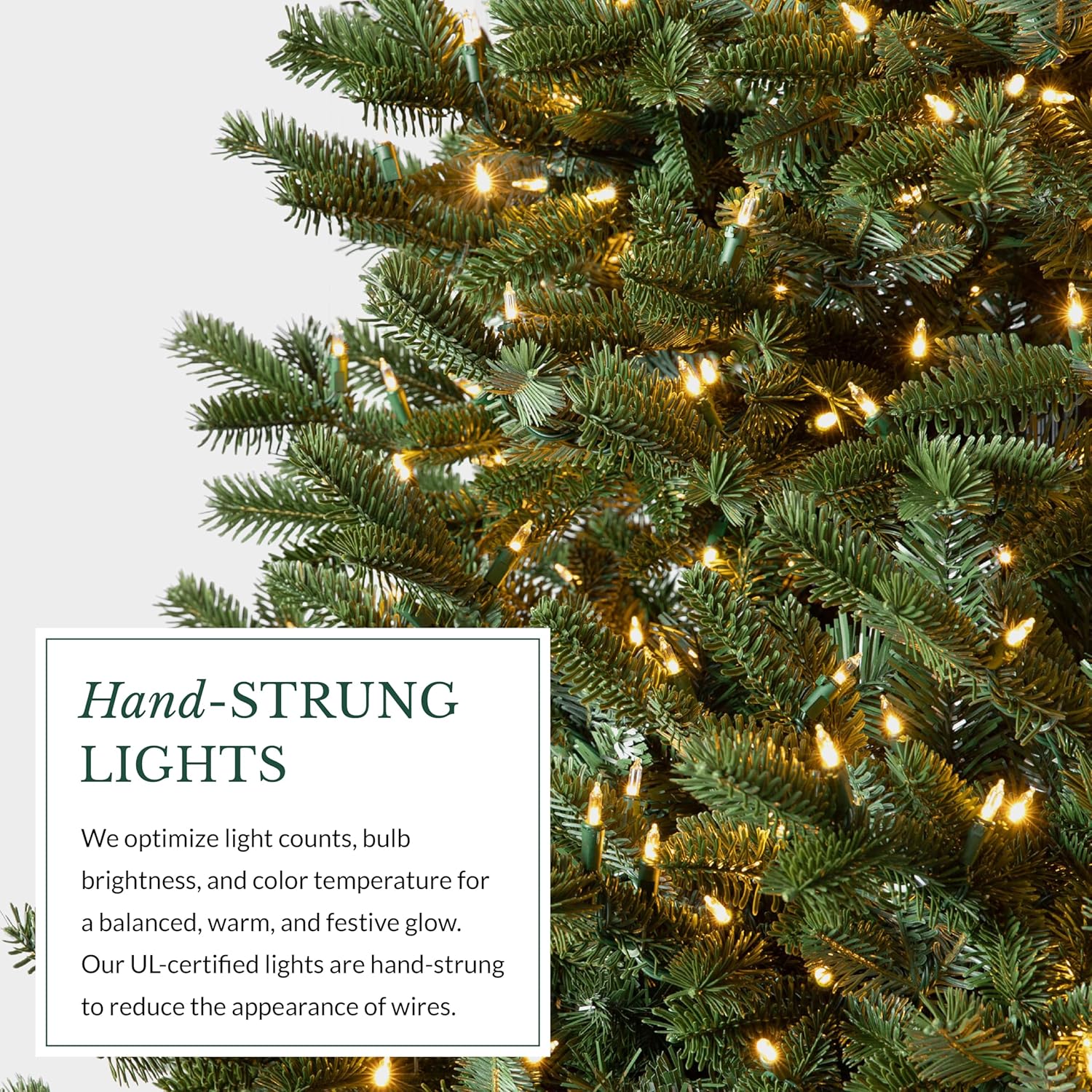
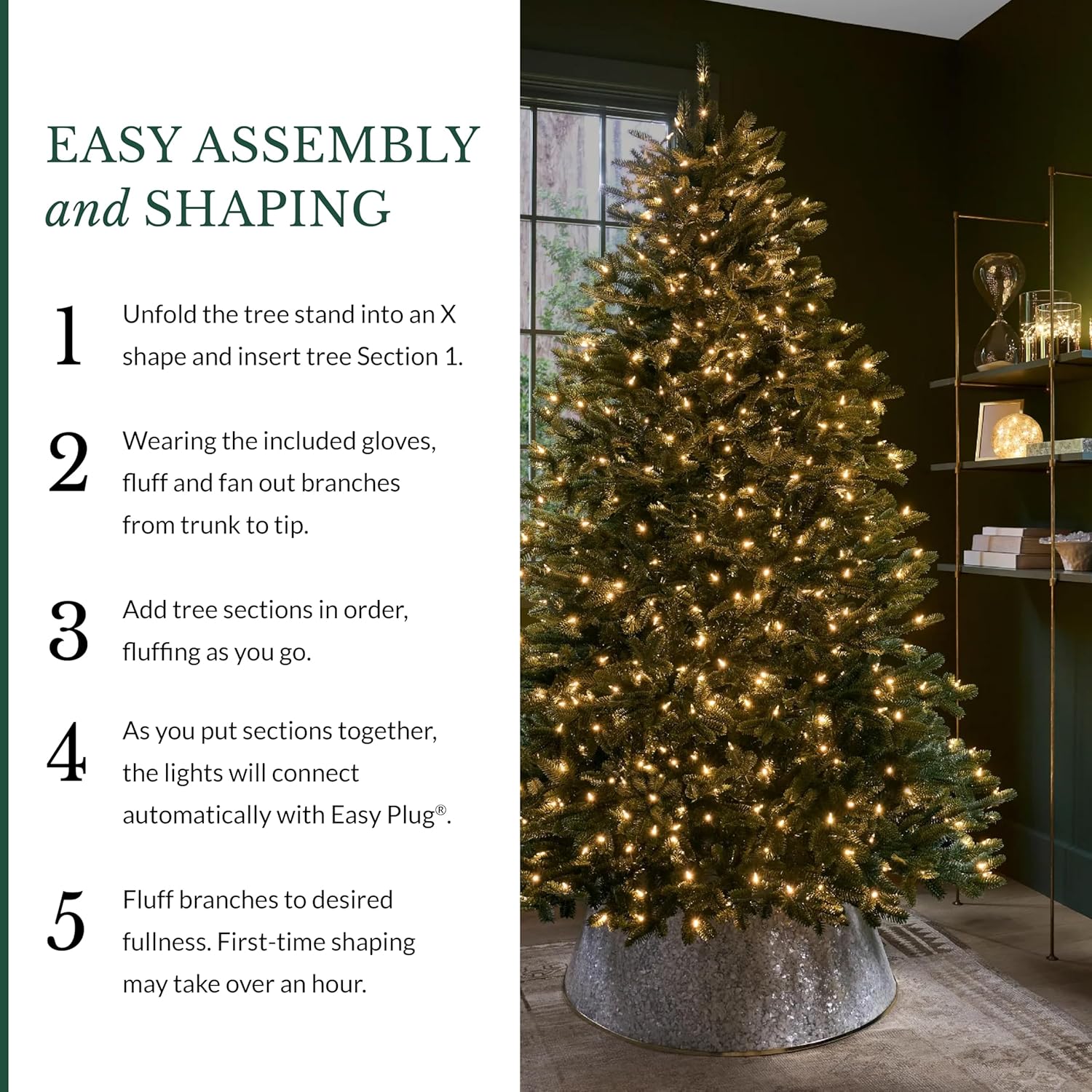
Before a single light or ornament goes on, every branch needs to be opened, separated, and shaped. This is the foundation of fullness. Think of each branch as a small starburst — spread the tips so they reach outward. This one step changes the silhouette dramatically.
The ribbon-sculpting technique pros use
Forget wrapping.
Cut ribbon into medium sections, tuck the end deep into the tree, and let the rest curve outward before dipping back in.
Little wave-like pockets create motion.
Those pockets become depth.
Depth becomes fullness.
Ornament clustering (the triad method)
Clusters are the secret weapon. Using three ornaments of different sizes creates a visual “anchor” point — the kind your eye is naturally drawn to. Instead of scattering ornaments evenly, cluster them and let those clusters form a rhythm around the tree.
More visual impact, fewer decorations needed.
Stem picks, florals, and fillers for hyper-lush volume
Once the primary decorations are in, fillers do the rest of the work. Berry picks, pine stems, floral sprays, metallic branches — all of them add texture and widen the silhouette. Tuck them into hollow spots or along the edges of branches that need structure.
This is the step where trees go from pretty… to wow.
Best Color Palettes for a “Full” Look
Metallic layering for dimensional shine
Metallics — gold, champagne, bronze, even soft silver — catch and bounce light differently. Mixed together, they create micro-layers of shine that make the tree look deeper and more textured. Instead of matching everything, blend warm and cool metallics the same way decorators do.
Dark-to-light gradient for perceived volume
Try placing darker ornaments toward the inside of the tree and lighter or more reflective ones outward. That subtle gradient tricks the eye into seeing more depth than what’s actually there.
The effect is gorgeous — rich, shadowed layers leading into a bright outer glow.
Common Mistakes That Make a Tree Look Sparse
Ornament spacing errors
Too much space between ornaments creates visual emptiness. It’s better to cluster and layer than spread everything out evenly.
Ribbon draping mistakes
One long ribbon wrapped around the tree creates a flat, horizontal band. It doesn’t build shape — it removes it.
Underusing fillers
Even beautifully placed ornaments can’t make up for empty branch tips or hollow centers. Fillers are what push the look from “decorated” to “full.”
FAQs
How do I make my Christmas tree look fuller without buying a new one?
Add pine picks and ribbon sections. They inflate the silhouette instantly.
Does the order matter — lights, ribbon, ornaments?
Lights always come first. They establish the depth map you’ll build on.
How many ornaments do I need for a 7-foot tree to look full?
You can achieve fullness with fewer ornaments if you cluster them and add fillers. Most designers recommend a mix of small, medium, and large pieces.
What’s the quickest way to fix a sparse-looking tree?
Add ribbon waves and stem picks. Those two steps alone can completely change the shape.
Check Out The Christmas Tree Here