

Why Precision Matters More Than Ever in Modern Cooking
Ask any chef what separates a good meal from a great one, and you’ll hear the same thing: precision. Seasoning matters. Technique matters. But the one factor that consistently determines tenderness, juiciness, and safety is temperature—the one variable you can’t “wing.”
Modern cooking only raises the stakes. With sous vide finishing, reverse-searing, pellet smokers, and specialty cuts gaining popularity, getting internal temperature right isn’t just helpful—it’s the whole game. A few degrees too high, and your beautifully marbled steak stiffens. A few degrees too low, and poultry becomes questionable.
A professional digital meat thermometer eliminates that uncertainty. Instead of guessing and hoping, you suddenly know—within seconds—what’s happening inside your food. And that changes everything.

What Defines a “Professional” Digital Meat Thermometer
If you’ve only ever used a bargain-bin thermometer, you might not realize how big the quality gap is. A professional model isn’t just a nicer version of the same tool—it’s built to survive the heat, pace, and chaos of an actual kitchen.
Accuracy standards:
The best tools consistently hit an accuracy level of ±0.5°F, even when bouncing between cold proteins, high-heat grills, and rapid-fire use.
Speed:
Professionals can’t wait around for a thermometer that takes 5–10 seconds to think. A pro-grade instrument gives a stable reading in 1–3 seconds—fast enough to protect juices, timing, and consistency.
Build quality:
Restaurant work is not gentle. Tools are dropped, splashed, wiped down dozens of times a day, and exposed to intense heat. That’s why professional thermometers use polished stainless probes, reinforced hinges, tough outer casings, and electronics designed to survive punishment.
They’re made to be trusted under pressure—because that’s exactly where they’ll be used.

Top Features to Look For in a Professional Thermometer
Choosing a thermometer isn’t just about specs; it’s about whether it supports you in real cooking conditions.
Waterproofing That Actually Matters
A waterproof rating isn’t just a buzzword. When you’re washing your tools constantly—or cooking in rain, steam, splatter, or smoke—this feature becomes the difference between a long-lasting tool and a dead one.
Clear, Backlit Display
Low light is normal in kitchens, grilling areas, and outdoor cookouts. A sharp backlit display means you can read the temperature instantly without squinting or angling the probe just right.
Smart Auto-Calibration
Chefs rely on consistency. Professional thermometers use internal processors that automatically adjust for environmental conditions, keeping readings accurate even with constant temperature swings.
Foldable vs. Fixed Probes
-
Foldable probes store easily, protect the sensor, and reduce pocket damage.
-
Fixed probes feel incredibly sturdy and are popular in fast-paced kitchens.
Both have their place—it’s a matter of preference and workflow.
The Best Professional Digital Meat Thermometer (2025 Performance Winner)
This year’s top-performing thermometer didn’t win by accident. It excelled where it matters most: speed, precision, and durability.
How It Performed in Real Testing
Across steaks, whole chickens, and delicate fish, it consistently delivered:
-
A near-instant 1–2 second response
-
Reliable accuracy across all temperature zones
-
Stable readings without drifting or jumping
It behaves like an extension of your instincts—fast and confident.
Built to Survive a Real Kitchen
Its reinforced probe, sturdy casing, and full waterproofing make it a workhorse rather than a fragile gadget.
Designed for Comfort
The handle fits naturally, even when your hands are wet or you’re wearing gloves. The auto-rotating display is a blessing when you’re reaching into awkward angles or flipping food with one hand.
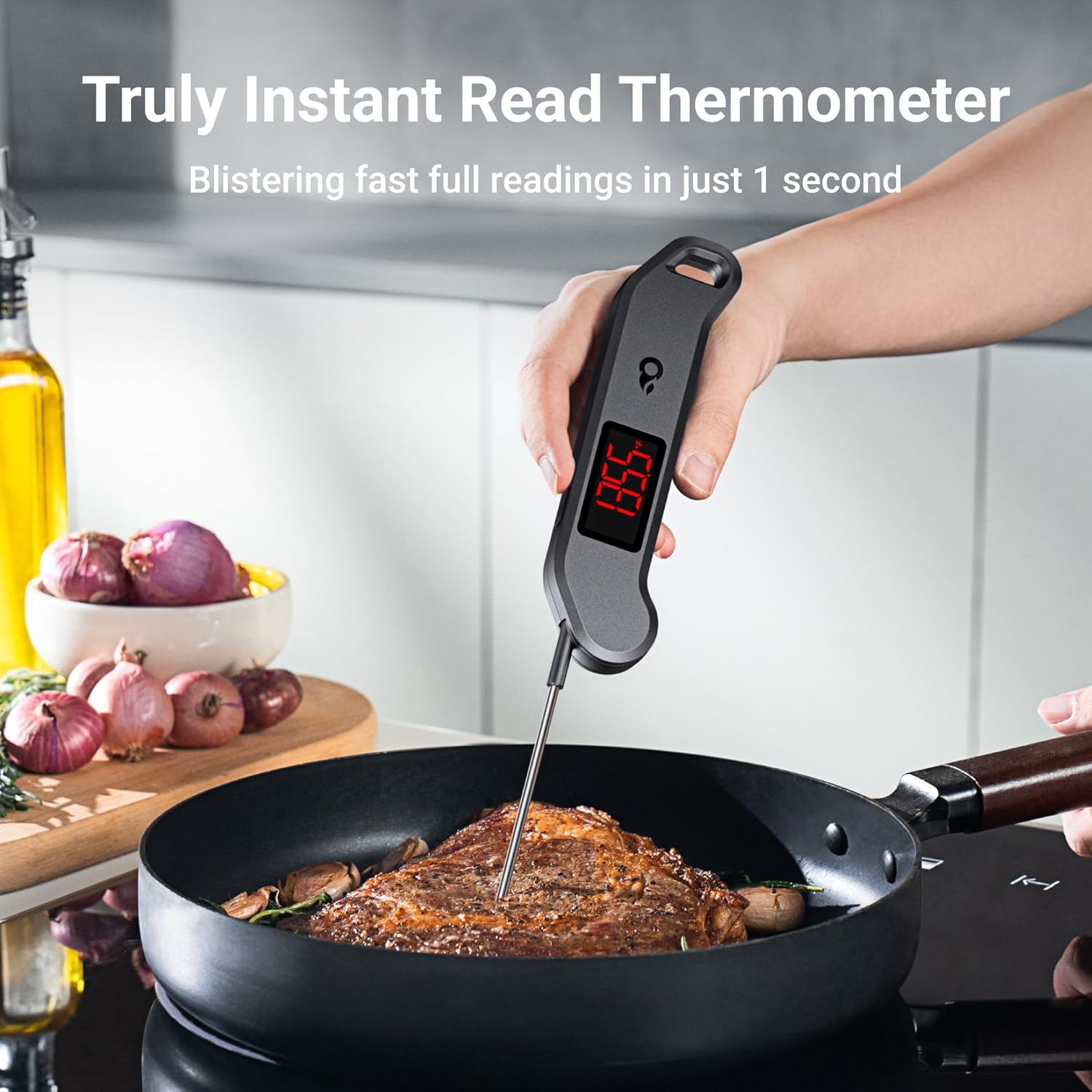
Where Professional and Consumer Thermometers Part Ways
Side by side, the differences are obvious.
Accuracy:
A cheap thermometer might be off by several degrees. That doesn’t sound like much—until you cut into a premium steak and realize it’s gone from perfect to overdone.
Speed:
Slow thermometers force you to linger with the probe inserted, letting heat escape and moisture evaporate.
Longevity:
Consumer models aren’t designed for repeated high-heat, high-moisture, high-intensity use. They eventually fog, crack, short out, or lose calibration.
In professional tools, you’re buying reliability, not just readings.

How to Use a Professional Thermometer the Right Way
Even the best tool needs proper technique to shine.
Finding the Right Spot
-
Steaks: Go in from the side and aim for the thickest point.
-
Poultry: Avoid bones—they throw off readings.
-
Pork: Stay away from fatty pockets that retain heat unevenly.
Mistakes People Don’t Realize They’re Making
-
Checking the surface instead of the center
-
Measuring only one spot
-
Leaving the probe in long enough for the heat to travel up the probe
A quick, precise insertion into the thickest part is the secret to reliable results.

FAQs
How accurate should a professional thermometer be?
Look for ±0.5°F. It’s the standard serious cooks rely on.
Is probe thickness important?
Yes—thin probes cause less juice loss and give faster readings.
Do I really need waterproofing?
If you cook often, yes. Water damage is the #1 cause of thermometer failure.
How often should I calibrate?
Auto-calibrating models stay accurate, but checking every few months keeps your confidence high.
Can one thermometer work for grilling and indoor cooking?
Absolutely, as long as it’s built to handle high heat and rapid temperature changes.